
Con4sation®
Better Conversations. Happier Lives.
We are a 'people skills' assessment and training company that specialises in difficult conversations.
Online or In-person. Always interactive. Always engaging.
Better Conversations create Better Relationships and Better Relationships ensure you live a Happier Life.

Con4sation® FOR WORK
We don't do dull.Using theatre to bring learning to life.Interactive and Engaging.
Your culture is the conversations people are having. We have a proven record of improving those conversations by helping participants to connect emotionally to the learning. Our use of actors allow conversations to come alive in the training session. We enable participants to observe and practise conversations, bringing the learning to life.Why it works?The reason we all love tv, theatre and film is because we connect emotionally to the characters involved. Our use of actors creates the same emotional response within participants that make them want to learn and change. It makes it personal.Better still, the actors will often voice the opinions participants are thinking, but may be unable or unwilling to say, ensuring the discussions you need to happen... happen.The secret ingredient.All our workshops use the con4sation® methodology. We believe 'people stuff' should be simple to understand, so we have condensed best practise and established (but sometimes complex) theory into 4 simple and accessible elements. It's why we are called CON4SATION.
testimonials
A number of well known organisations and brands use con4sation® to help make their workplaces happier, safer and healthier.
Here's what they say:
some of what we do

Manager.Fit™(con4sation roleplay assessments)
“They said all the right things in the interview. Six months later, HR was cleaning up the mess.”If that sounds familiar, you’re not alone.ManagerFit™ is a live behavioural assessment that reveals how managers actually perform under pressure — before you promote or hire them.We don’t test personality. We test real-time behaviour in the moments that make or break teams. Moments of conflict, feedback, accountability or empathy under stress.

Business Communication survival kit
Everyone has suffered a difficult conversation, awkward situation or an annoying person in their lives. Using this as a gateway, our facilitators and actors share best practise on how to handle these. Using interactive, experiential exercises participants learn the biology and psychology involved in our difficult interactions. Understanding the commonalities we all share, participants learn how to survive and thrive in their difficult interactions.
Better Conversations. Better Relationships. Happier Lives.

Dangerous conversations
When the worst happens, investigations often discover that it was the 'human factors' involved that caused it to happen. Using theatre and interactive exercises, we explore these human factors and how to flex your approach ensure positive safety conversations. We love delivering this workshop as we know safety is the gateway to a positive organisational culture.Better Conversations. Better Relationships. Happier and Safer lives.

How am I supposed to feel?
Today's workplaces are fast-paced, high-pressure, and constantly changing — and people are bringing both visible and invisible stress with them to work. Unrecognised trauma and unmanaged stress can quietly damage teamwork, morale, and performance. Our use of actors and theatre encourages discussion and engagement.This powerful workshop equips your people with the tools they need to:
Recognise the hidden impacts of stress and trauma.
Build personal and team resilience.
Foster psychological safety and trust.
Strengthen leadership practices through a trauma-informed lens.
And it doesn't stop there....
Wherever conversations take place, we help to make them better. Have an idea or need help to create change? We'll be here for you. By working in partnership we can make a real difference. Maybe even some magic...If you have time, check out how we helped one client reduce their staff turnover by 50%. It was a first for their entire industry.
Have even more time? Here's a few case studies and testimonals for you.
about Con4sation®
About our founder:
Adam Moore
Finding himself sitting at his breakfast table during the 2020 lockdown, Adam was contemplating his work as Creative Director of Source Business Actors. Source uses actors to enable people to observe and practise difficult conversations in a learning environment.
For over two decades Adam has been making 'difficult conversation' training engaging and interactive.
A strong believer in simplicity as a way to make learning inclusive for all, he had a Eureka moment. All his work could be condensed into 4 accessible elements. Con4sation® was born.
Better con4sations. Happier relationships. Simple.

introducing con4sation®
con4sation® at a glance
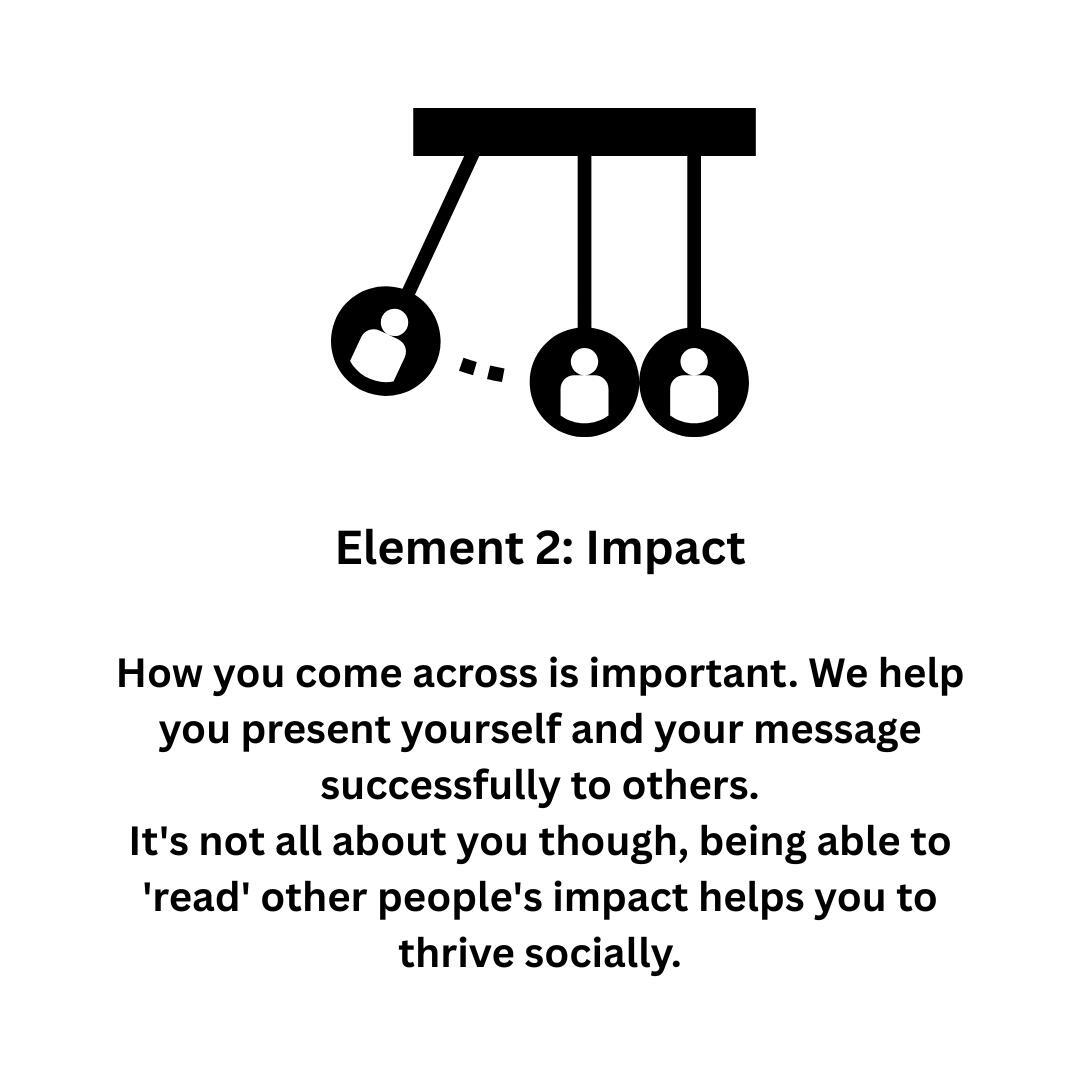
The con4sation® methodology takes best communication practise and breaks it down into 4 easy accessible elements.
Learning works best when things are simple.

Contact
Interested in a specific workshop or service?
Click the button below.
Got a question? Need more info?
Email [email protected] or drop us a line below.
It all starts with a conversation :)
Thank you
That's it sent. We'll be back in touch soon!
Con4sation® FOR Life
better conversations.
better relationships.
happier lives.
At Con4sation® we've worked out something hugely important for your life...Think about the last time you were unhappy. Did it involve another person? Any interaction between you and another is a 'relationship'. Relationships are just lots and lots of different conversations. If you have better conversations, you have better relationships and you will live a happier life.It sounds simple because it is. You have the power to have better conversations and we enable this.Do you ever lie in bed at night thinking "Why didn't I just say...?"We help with that.Better Conversations. Better Relationships. Happier Lives.
how we help
Communication survival kit for life
Everyone has suffered a difficult conversation, awkward situation or an annoying person in their lives. Using this as a gateway, our facilitator shares best practise on how to handle these. Using interactive, experiential exercises, you will learn the biology and psychology involved in your difficult interactions. Understanding the commonalities we all share, you learn how to survive and thrive in your difficult interactions.Our 'Communication Survival Kit' workshop is run over two days and shares the con4sation® methodology needed to help you survive and thrive in your difficult conversations. Interactive and tailored to your conversations.WARNING: May contain actors to bring the learning to life, but no acting is involved for participants unless you really want to :)Delivered regularly online and also in person on the stunning island of Mallorca. Just incase you need a good excuse to visit..."The skills I've learnt have not only helped in my working life, but also in my personal and family relationships too."
remote rescue
Have a difficult conversation that needs to happen NOW? Request a coaching call to happen almost immediately using your preferred video calling platform. You share the challenge and we work out a way forward together. We'll tailor best practise to achieve the best outcome for you.
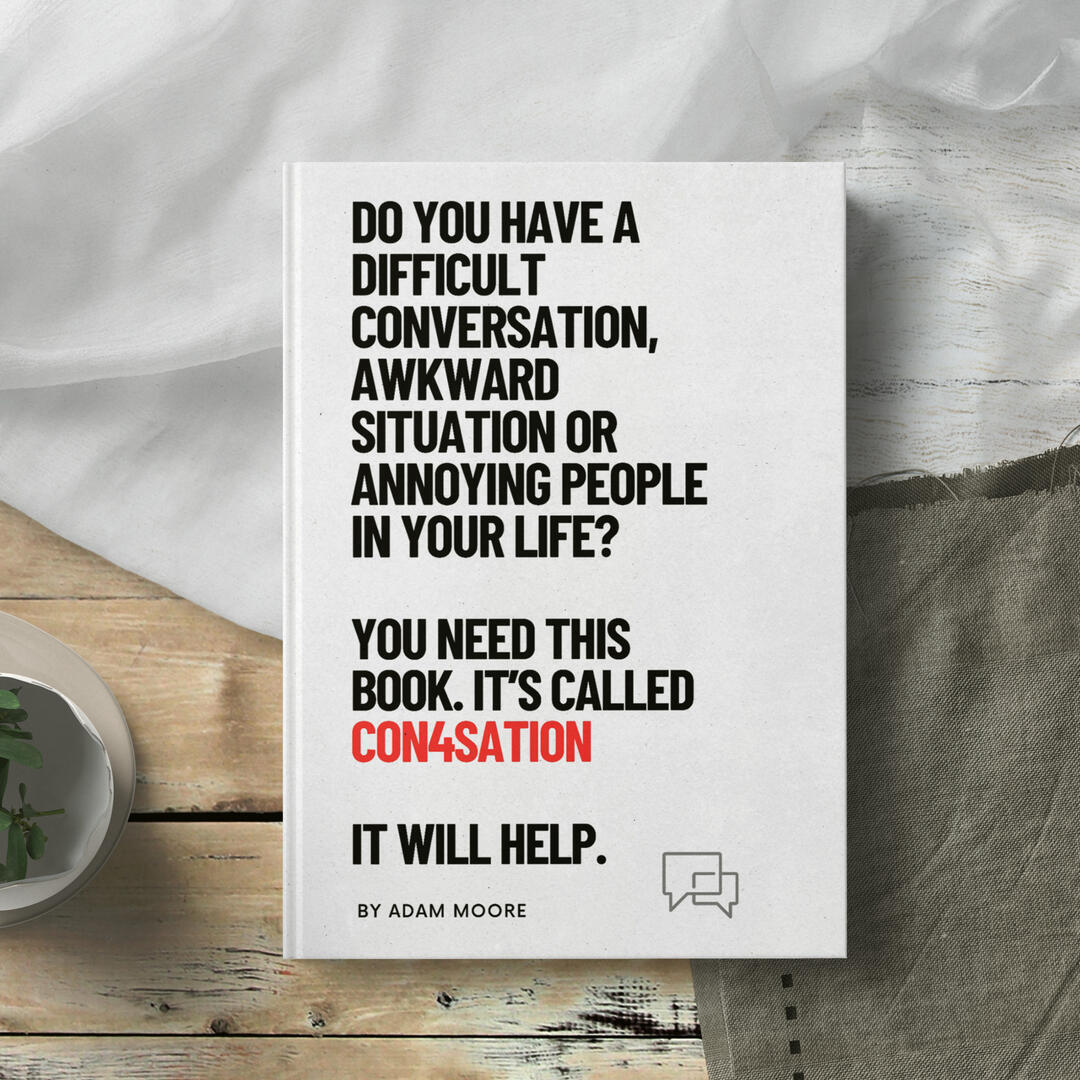
Con4sation
the book
All the learning from our workshops in a book.
Con4sation learning on your coffee-table, bookshelf or even bring us to bed.
testimonials and case studies
A number of well known organisations and brands use con4sation® to help make their workplaces happier, safer and healthier.
Here's what they say:
Transport

Working with Britain's largest transport operator, the focus was to lead from the front in customer service, working safely and the leadership of their 30,000 employees. We supported them to create a 'common language' through management development programmes, conferences and recruitment assessments. The results that followed: happier working culture, a lowering of grievances, reduced customer complaints and a renewed focus on choosing and developing future talent.
government
How do you ensure the people you are recruiting can actually do what they say they can do? It's simple. Get them to 'show' you. Our use of actors and 'assessed' roleplay conversations have ensured organisations are recruiting wisely and fairly. When you are recruiting for a new manager or customer facing role we can give you peace of mind to support your choice. Our support has benefited the transport, financial and medical sectors. In addition, we have been working with government agencies since 2010, so if you hold a leadership role in the civil service you may have had a 'difficult conversation' with one of our actors!
Construction

Looking to lower the amount of people leaving your organisation?
A leading UK Traffic Management Company who adopted the con4sation approach reduced their staff turnover by almost 50%. A Con4sation® management development programme and an alignment of that learning to internal processes created magic.
energy

When tasked with communicating a change of approach to critical safety management and the need to embed a renewed leadership focus with over 800 offshore workers was a challenge for our client in the energy sector. The creation, delivery and hosting of a number of conferences sharing the con4sation methodology ensured the message landed. Our use of actors demanded the audience connected emotionally with the learning. Further support of monthly updates from Con4sation helped to continue and build upon the learning.

The Leadership Stress Test that reveals ‘What’s Behind the Mask’ before you hire or promote.
“They said all the right things in the interview.
Six months later, HR was cleaning up the mess.”
If that sounds familiar, you’re not alone.ManagerFit™ is a live behavioural assessment that reveals how managers actually perform under pressure — before you promote or hire them.We don’t test personality. We test real-time behaviour in the moments that make or break teams.Moments of conflict, feedback, accountability or empathy under stress.

What ManagerFit™ Gives You:
Evidence of how a leader behaves under social threat and interpersonal stress.Clarity on strengths, blind spots, and leadership risks before you hire and the damage is done.Confidence in high-stakes promotion, hiring, or development decisions.You get a detailed report, a real-time simulation using a professional actor, and a trained behavioural assessor.No hypotheticals. No theory. Just knowledge of how they handle pressure and how it impacts their performance.

Why Live Simulation?
Because traditional assessments and ai can’t simulate this:"A direct report just challenged you publicly when you’ve delivered a message you don’t agree with. Now have the conversation"The answer isn’t in a psychometric test. It’s in the moment — and we recreate that moment, live (and assess it).

How it works
What people say
You know English.
Now feel confident using it.
Business English and communication coaching for professionals who want to speak up, think on their feet and make themselves understood when it matters.Available online and in person in Mallorca. For professionals with B2 English and above.
English for the conversations that matter.
Knowing English and feeling confident using it at work are two different things.We'll work on the situations you actually face, helping you find the words, develop your confidence and communicate more effectively when the conversation matters.
Meetings and discussions
Contribute ideas, interrupt politely, disagree constructively and make sure your voice is heard.

Presentations and influencing
Explain your ideas clearly, handle unexpected questions and persuade others without losing your train of thought.

Difficult conversations
Give feedback, raise concerns and manage disagreements while maintaining professional relationships.

Leadership and everyday communication
Build rapport, manage misunderstandings and communicate with colleagues, clients and stakeholders.

The Con4sation® difference
It's not just what you say. It's what happens when you say it.
Have you ever known exactly what you wanted to say, only to find the words disappear when the pressure is on?It happens in our first language. In a second language, it can feel even harder.The Con4sation® methodology helps you understand what happens when conversations become uncomfortable, how your behaviour affects other people and how to respond more effectively.We'll bring four key elements into your Business English practice.
con4sation® at a glance
The four elements of the Con4sation® approach are integrated into the way we practise and improve your professional communication.Because the goal isn't simply to speak English correctly. It's to communicate effectively, even when the conversation doesn't go to plan.
How we work together
Practical learning. Built around you.
Everyone has different communication challenges. You might want to feel more confident contributing in meetings, prepare for a presentation or develop the skills to handle difficult conversations in English.We'll start with what you want to achieve and build our sessions around the situations you actually face.
One-to-one Business English & Communication Coaching
Your goals. Your challenges. Your sessions.Individual coaching tailored to your professional needs, English level and communication goals.We'll work on the language you need, practise realistic workplace conversations and explore how to respond when things don't go to plan. You'll receive practical feedback and opportunities to try different approaches in a supportive environment.Ideal for professionals who want personalised support and the opportunity to practise without the pressure of a group.Available online and in person in Mallorca.

Small-group Workshops
Learn together. Practise together. Improve together.Interactive workshops where you can develop your professional English while learning from other people's experiences.Through realistic scenarios, discussion and practical exercises, you'll practise expressing opinions, managing disagreements, building rapport and communicating with greater confidence.The focus is on participation, feedback and learning you can take straight back to work.Available for groups in Mallorca and online.

Business & Corporate Training
Better conversations. Stronger working relationships.For organisations that want their people to communicate more effectively in English.Tailored workshops around your team's needs, from contributing to international meetings and influencing stakeholders to giving feedback and handling challenging conversations.The Con4sation® methodology brings an additional dimension to language training, helping participants explore not only the words they use but also how they listen, respond and affect others.Sessions can be designed for specific teams, professional situations or management development programmes.Available online and in person in Mallorca.

Every session has a purpose
This isn't about working through a generic textbook or memorising phrases you'll forget when the pressure is on.We'll identify what you want to improve, practise it in realistic situations, reflect on what happens and work on doing it better.You'll build your English while developing practical communication skills you can use in everyday professional life.

I'm Adam Moore, founder of Con4sation® and a communication skills trainer with a background in teaching, acting and performance.I've spent much of my career exploring how people communicate, what gets in the way and how we can become more effective when conversations matter.My experience spans education, professional performance and corporate training, helping people develop practical skills they can use in real situations.I bring three things into the learning.The teacherI understand how people learn and how to turn complex ideas into practical, accessible skills. Sessions are structured around your goals, your existing English level and the situations you need to handle.The performerMy background as a professional actor has given me a particular interest in how people behave, react and communicate under pressure. It also brings energy, realism and practical experimentation to the learning experience.The communication specialistThrough Con4sation®, I've developed a practical methodology for understanding human behaviour and improving conversations. It brings together self-awareness, impact, listening and likeability — skills that matter just as much in English as they do in your first language.
Why this mattersYou won't simply practise the right phrases and hope you remember them when you need them.You'll have the opportunity to try things out, receive feedback, explore different approaches and develop skills that transfer into your working life.My aim is simple: to help you become a more confident, capable communicator in English — without feeling you have to become someone else to do it.

con4sation® learning hub
Helping you with common difficult converstions, awkward situations and the annoying people in your life.
work and business
family & relationships
understanding difficult conversations

Why Do People Get Defensive?
Understanding defensive reactions during difficult conversationsWritten by Adam MooreFounder of Con4sation® | Author of Con4sation® | Difficult Conversation SpecialistHave you ever said something completely reasonable to someone, only to watch them become defensive?You weren't attacking them.You weren't shouting.You may even have chosen your words carefully.And yet suddenly they're arguing, blaming you, changing the subject or telling you that you're the one with the problem.So why does this happen?The simple answer is that people don't always respond to what you actually say.They respond to what they think your words mean.A comment that feels like a simple observation to you can feel like criticism, rejection or a threat to somebody else.WHAT IS BEHIND DEFENSIVENESS?One way of understanding this is through the LIFE influences in Con4sation®.Liberty – Do I feel that someone is trying to control me?Importance – Do I feel valued, respected or important?Fish out of Water – Do I feel uncomfortable, exposed or out of my depth?Equality – Do I feel that I'm being treated fairly?When one of these feels threatened, our response can change very quickly.We may defend ourselves.We may attack.We may withdraw.We may blame somebody else.Or we may simply refuse to have the conversation.SO WHAT SHOULD YOU DO?The natural reaction is often to push harder."That's not what I said.""You've completely misunderstood me.""Why are you getting so defensive?"Unfortunately, these responses can make things worse.Instead, become curious.Try:"Tell me what you're hearing me say."Or:"What is it about this conversation that's uncomfortable for you?"You don't have to agree with their reaction.You don't even have to accept their interpretation.But understanding it gives you information.THE CONVERSATION UNDERNEATH THE CONVERSATIONSometimes the argument isn't really about the thing you're discussing.Underneath it may be a question about respect.Or trust.Or fairness.Or control.Or whether somebody feels valued.This is why difficult conversations require more than simply finding the "right words".You need to understand what might be happening for the other person.And you need to understand what's happening for you too.REMEMBERSomeone becoming defensive doesn't automatically mean you've done something wrong.But it is information.Pay attention to it.Ask yourself:What might this person believe they are losing, being threatened with or being judged for?That question can completely change the direction of a conversation.Sometimes the most useful thing you can do before having a difficult conversation is to understand what's really happening.Better conversations. Better relationships. Happier lives.

How Do I Start a Difficult Conversation?
What to say when you don't know how to beginWritten by Adam MooreFounder of Con4sation® | Author of Con4sation® | Difficult Conversation SpecialistThe hardest part of a difficult conversation is often the first twenty seconds.You've been thinking about it.You've rehearsed it in your head.You've imagined how they might react.And now you're standing in front of them wondering:"How on earth do I start this?"The answer is simpler than you might think.Don't start with the person.Start with the subject.THE CON4SATION OPENERA useful way to begin is:WHATWhat do you need to talk about?WHYWhy do you need to talk about it?WONDERWhat open question could you ask that gets the other person talking?For example:"I'd like to talk about what happened in yesterday's meeting because I'm concerned about how it affected the team. I'm wondering how you felt the meeting went?"And then comes the difficult bit.Stop talking.Let them answer.DON'T START WITH "YOU"Compare:"You were rude to me yesterday."with:"I'd like to talk about what happened yesterday because I left the conversation feeling uncomfortable."The second version doesn't automatically make the other person wrong.It creates space for a conversation.A DIFFICULT CONVERSATION ISN'T A SPEECHOne of the biggest mistakes people make is preparing what they are going to say without preparing to listen.They write their argument in their head.They collect evidence.They prepare their response to the response they imagine they're going to get.Then the conversation becomes a performance.That's not a conversation.A conversation requires two people.BEFORE YOU STARTAsk yourself:What exactly do I need to talk about?Why does it matter?What do I genuinely want to understand from them?That final question is important.Because sometimes the objective isn't to make them agree with you.It is to understand what's actually going on.AND IF YOU'RE NERVOUS?That's normal.Difficult conversations are supposed to feel difficult.You don't need to eliminate the nerves.You need to prepare well enough to have the conversation despite them.Try writing down your:What.Why.Wonder.Then start.And listen.Better conversations. Better relationships. Happier lives.

HOW DO I TELL SOMEONE SOMETHING THEY DON'T WANT TO HEAR?
How to be honest without being unnecessarily harshWritten by Adam Moore
Founder of Con4sation® | Author of Con4sation® | Difficult Conversation SpecialistSometimes the kindest thing you can do is tell someone the truth.The problem is that truth can be uncomfortable.You may be worried about upsetting them.You may be frightened of their reaction.You may be worried that the relationship will change.So you soften the message.You delay it.You hint at it.Or you don't say it at all.Unfortunately, avoiding the difficult message doesn't make the problem disappear.It usually gives it more time to grow.CLARITY DOESN'T MEAN CRUELTYBeing honest doesn't mean being brutal.There is a huge difference between saying what you mean and deliberately hurting somebody.Focus on behaviour, rather than labelling the person.Instead of:"You're selfish."Try:"When decisions are made without discussing them with me, I feel as though my opinion isn't being considered."The first attacks their identity.The second describes an experience.DON'T ASSUME INTENTIONThis is another important distinction.You may know what someone did.You don't necessarily know why they did it.Instead of:"You deliberately ignored me."Try:"I noticed that you didn't respond to my messages. Can you help me understand what was happening?"You are still addressing the problem.But you're leaving room for information you don't yet have.LISTEN TO THE ANSWERIf you've decided what the other person thinks before the conversation starts, you aren't really having a conversation.You're delivering a verdict.Give them an opportunity to explain.They may still disagree.They may become upset.They may not like what you're saying.That's okay.A successful difficult conversation doesn't necessarily end with everybody feeling happy.Sometimes success simply means you've finally said what needed to be said honestly and respectfully.ASK YOURSELF ONE QUESTIONBefore you speak, ask:"Am I saying this because it needs to be said, or because I want them to feel bad?"If it's the first, you're probably on the right track.If it's the second, stop and reconsider.Being direct and being kind are not opposites.You can do both.Better conversations. Better relationships. Happier lives.

WHAT to do if a person BECOMEs ANGRY?
What to do when someone gets angry during a difficult conversationWritten by Adam MooreFounder of Con4sation® | Author of Con4sation® | Difficult Conversation SpecialistYou've finally started the conversation.You've tried to be calm.You've chosen your words carefully.And suddenly they're angry.Their voice changes.They become defensive.Perhaps they're shouting.Your first instinct may be to defend yourself.Or shout back.Or end the conversation immediately.Sometimes that is necessary.But anger doesn't automatically mean the conversation has failed.WATCH YOUR OWN REACTIONThis is one of the most important things to remember.Their emotional response can trigger yours.Their anger can make you angry.Their defensiveness can make you defensive.And suddenly you're no longer discussing the original problem.You're fighting about how you're fighting.Take a breath.Slow down.You don't have to match their emotional intensity.DON'T FIGHT FIRE WITH FIREStatements such as:"Calm down.""You're being ridiculous.""There's no need to get angry."rarely calm somebody down.They usually communicate:"Your emotional response is the problem."Instead, try curiosity."I can see this is really important to you. Can you help me understand what's upsetting you?"That doesn't mean you're accepting blame.You're gathering information.WHAT'S UNDER THE ANGER?Anger is often the visible emotion.There may be something underneath it.Fear.Embarrassment.Frustration.Feeling ignored.Feeling disrespected.Feeling powerless.You don't need to diagnose the person.Simply remain curious about what might be happening.DON'T RUSH TO FIX ITSometimes people need a moment.You don't have to fill every silence.You can say:"I think we're both getting frustrated. I'd rather pause and come back to this than make things worse."If you do pause, make the pause specific."Let's take half an hour and talk again at 3pm."Otherwise "let's talk later" can easily become avoidance.REMEMBER YOUR INNER VOICEDuring difficult conversations, there is another conversation happening inside your head."They're being unreasonable.""This is going badly.""I need to win this."Pay attention to it.Your inner voice influences your behaviour.THE GOAL ISN'T TO WINThe goal of a difficult conversation isn't to defeat the other person.It's to understand what's happening and decide what needs to happen next.Sometimes that means reaching agreement.Sometimes it means setting a boundary.Sometimes it means accepting that you disagree.And sometimes it means ending the relationship.But you are far more likely to make a good decision when you can stay present during the conversation.Better conversations. Better relationships. Happier lives.

HOW DO I SET BOUNDARIES WITHOUT STARTING A FIGHT?
How to set healthy boundaries without trying to control another personWritten by Adam Moore
Founder of Con4sation® | Author of Con4sation® | Difficult Conversation SpecialistBoundaries have become a popular subject.But there's a problem.A boundary isn't the same thing as telling somebody else what they are allowed to do.A boundary is about what you will do.For example:"You can't speak to me like that."is a demand.Compare it with:"If the conversation becomes abusive, I'll end it and we can talk when we're both calmer."That's a boundary.You're not controlling their behaviour.You're deciding what you will do in response to it.WHY ARE BOUNDARIES SO DIFFICULT?Setting a boundary can feel confrontational.You may worry about upsetting somebody.You may fear rejection.You may have learned that keeping the peace is more important than expressing what you need.Or perhaps you've tried to set boundaries before and the other person reacted badly.But a boundary isn't a punishment.It's information.It tells another person what you are comfortable with and what you aren't.BE SPECIFICVague boundaries are difficult to understand.Instead of:"I need you to respect me."try to identify the behaviour."If you raise your voice at me, I'm going to stop the conversation and we can continue when we're both calmer."Now the boundary is clear.OWN YOUR PARTA useful boundary doesn't require the other person to agree with you.You can say:"I understand that you don't agree. This is still what I'm going to do."That's very different from:"You have to agree with me."FAIRNESS, RESPECT AND TRUSTGood boundaries are connected to three important foundations of healthy conversations:Fairness.Respect.Trust.Ask yourself whether your boundary is genuinely protecting one of those things, or whether you're simply trying to control the other person.FOLLOW THROUGHA boundary without action isn't really a boundary.If you've said you'll leave the conversation when it becomes abusive, you need to be prepared to leave the conversation.Not dramatically.Not as a punishment.Simply because you've already explained what you will do.TRY THIS EXERCISEComplete these three sentences:"I am comfortable with...""I am not comfortable with...""If that happens, I will..."This turns a vague feeling into something you can actually communicate.A boundary isn't a wall.It's information about where you stand.And sometimes knowing where you stand makes difficult conversations much easier.Better conversations. Better relationships. Happier lives.

HOW DO I SET BOUNDARIES WITHOUT STARTING A FIGHT?
How to set healthy boundaries without trying to control another personWritten by Adam Moore
Founder of Con4sation® | Author of Con4sation® | Difficult Conversation SpecialistBoundaries have become a popular subject.But there's a problem.A boundary isn't the same thing as telling somebody else what they are allowed to do.A boundary is about what you will do.For example:"You can't speak to me like that."is a demand.Compare it with:"If the conversation becomes abusive, I'll end it and we can talk when we're both calmer."That's a boundary.You're not controlling their behaviour.You're deciding what you will do in response to it.WHY ARE BOUNDARIES SO DIFFICULT?Setting a boundary can feel confrontational.You may worry about upsetting somebody.You may fear rejection.You may have learned that keeping the peace is more important than expressing what you need.Or perhaps you've tried to set boundaries before and the other person reacted badly.But a boundary isn't a punishment.It's information.It tells another person what you are comfortable with and what you aren't.BE SPECIFICVague boundaries are difficult to understand.Instead of:"I need you to respect me."try to identify the behaviour."If you raise your voice at me, I'm going to stop the conversation and we can continue when we're both calmer."Now the boundary is clear.OWN YOUR PARTA useful boundary doesn't require the other person to agree with you.You can say:"I understand that you don't agree. This is still what I'm going to do."That's very different from:"You have to agree with me."FAIRNESS, RESPECT AND TRUSTGood boundaries are connected to three important foundations of healthy conversations:Fairness.Respect.Trust.Ask yourself whether your boundary is genuinely protecting one of those things, or whether you're simply trying to control the other person.FOLLOW THROUGHA boundary without action isn't really a boundary.If you've said you'll leave the conversation when it becomes abusive, you need to be prepared to leave the conversation.Not dramatically.Not as a punishment.Simply because you've already explained what you will do.TRY THIS EXERCISEComplete these three sentences:"I am comfortable with...""I am not comfortable with...""If that happens, I will..."This turns a vague feeling into something you can actually communicate.A boundary isn't a wall.It's information about where you stand.And sometimes knowing where you stand makes difficult conversations much easier.Better conversations. Better relationships. Happier lives.

WHY DO I AVOID DIFFICULT CONVERSATIONS?
Why avoiding conflict can feel easier — and what it can cost youWritten by Adam Moore
Founder of Con4sation® | Author of Con4sation® | Difficult Conversation SpecialistYou know you need to have the conversation.You've thought about it.You've rehearsed what you might say.And yet you still don't do it.You tell yourself:"I'll do it tomorrow.""It's not the right time.""Maybe it'll sort itself out."Sometimes it does.Often it doesn't.AVOIDANCE FEELS GOOD — AT FIRSTAvoiding a difficult conversation gives you immediate relief.You don't have to deal with the discomfort.You don't have to see their reaction.You don't have to risk rejection, anger or disagreement.Your brain gets a little break.The problem is that the original issue is still there.And now you've added another problem:You know you're avoiding it.THE CONVERSATION INSIDE YOUR HEADBefore we have a difficult conversation with another person, we often have hundreds of conversations with ourselves."They'll get angry.""They'll think I'm selfish.""What if they leave?""What if I make everything worse?"Some of these thoughts may be accurate.But some are simply predictions.And predictions aren't facts.WHAT ARE YOU PROTECTING?If you're avoiding a difficult conversation, ask yourself:"What am I trying to protect?"Perhaps it's the relationship.Perhaps your reputation.Perhaps your comfort.Perhaps your sense of being liked.Then ask:"What is avoiding this conversation costing me?"That second question is often more revealing.Because avoidance has a cost too.Resentment.Stress.Poor relationships.Lost opportunities.Sleepless nights.Sometimes the cost is much greater than the discomfort of having the conversation.START SMALLYou don't need to become somebody who suddenly loves confrontation.Start with smaller conversations.Say the thing you've been putting off.Ask the question you've been avoiding.Tell somebody what you actually need.You are building a skill.Not trying to become fearless.AND SOMETIMES YOU NEED HELPThere are conversations where preparation makes a huge difference.Talking through what you want to say with somebody impartial can help you separate:What you know.What you assume.What you feel.And what you actually need to communicate.You don't necessarily need someone to tell you what to do.Sometimes you simply need somewhere safe to rehearse the conversation before you have it.Because the question isn't always:"Why am I avoiding this?"Sometimes it's:"What might change if I finally had it?"Better conversations. Better relationships. Happier lives.

HOW DO I DEAL WITH A DIFFICULT PARTNER?
How to stop arguing about who's right and start understanding the relationshipWritten by Adam Moore
Founder of Con4sation® | Author of Con4sation® | Difficult Conversation SpecialistWhen a relationship becomes difficult, it's very easy to build a case against the other person.You remember what they said.You remember what they did.You collect evidence.And eventually you're trying to prove that you're right.But being right doesn't necessarily make a relationship better.LOOK FOR THE PATTERNInstead of asking:"Who's wrong?"try asking:"What keeps happening between us?"Perhaps one person criticises.The other becomes defensive.The first person pushes harder.The second withdraws.The first becomes even more frustrated.And around you go.The problem isn't just either individual.It's the pattern between you.START WITH YOUR EXPERIENCEInstead of:"You never listen to me."try:"I often feel that I'm not being heard when we talk about money."It may not magically solve the problem.But it gives the other person something they can respond to.DON'T ASSUME WHAT THEY THINKYou may believe you know why your partner behaves the way they do.You might be right.You might be completely wrong.Ask."What happens for you when we have these conversations?"Then listen to the answer.Listening doesn't mean agreeing.It means allowing yourself to discover information you didn't have before.REMEMBER THE RELATIONSHIPDuring conflict, it's easy to forget that the person you're arguing with is also the person you're in a relationship with.Winning an argument can sometimes mean losing something much more valuable.That doesn't mean accepting poor behaviour.Healthy relationships still require boundaries.Sometimes the right decision isn't to repair the relationship.Sometimes a relationship is unhealthy and needs to end.But if you want to understand whether something can be repaired, you need to have conversations that go beyond:"You did this."and:"No, you did that."TRY THESE QUESTIONS"What do you think keeps happening between us?""What do you think I don't understand about your experience?""What do you need from me?""What do you think you need to change?""What do you think I need to change?"The answers may be uncomfortable.But uncomfortable information is often more useful than comfortable assumptions.A better relationship doesn't begin with winning.It begins with understanding what's really happening.Better conversations. Better relationships. Happier lives.

HOW DO I DEAL WITH A DIFFICULT COLLEAGUE OR BUSINESS PARTNER?
Practical advice for handling conflict at workWritten by Adam Moore
Founder of Con4sation® | Author of Con4sation® | Difficult Conversation SpecialistDifficult relationships at work can be exhausting.You see the person regularly.You may depend on them.Other people may be involved.And if you're a business partner, the consequences can be even bigger.The temptation is often to avoid the problem.But unresolved conflict rarely stays in one place.It affects meetings.Decisions.Communication.Productivity.And eventually the wider team.SEPARATE THE PERSON FROM THE PROBLEMSomeone can be difficult without being a bad person.And you can disagree with somebody without making them the problem.Try to identify the actual issue.What happened?What impact did it have?What needs to change?These questions are far more useful than:"Why are they such a nightmare?"GET SPECIFICAvoid vague statements such as:"You never communicate properly."Instead:"When decisions are made without discussing them with me, I don't have the information I need to do my part of the job."Specificity gives the other person something to respond to.LISTEN BEFORE SOLVINGYou may already have your solution.But you may not have the whole story.Ask:"How do you see what's happening?"Then listen.You might discover that they have a completely different understanding of the situation.DON'T MAKE IT PERSONALWorkplace conflict becomes much harder when it turns into a judgement about someone's character."You're lazy.""You're selfish.""You're impossible."These statements create defence.Talk about behaviour and impact instead.DIFFICULT CONVERSATIONS ARE PROFESSIONALSome people believe that having a difficult conversation is unprofessional.Often the opposite is true.Ignoring a problem because you're uncomfortable isn't necessarily professional.Addressing an issue respectfully can be one of the most responsible things you can do.BUSINESS PARTNERS ARE DIFFERENTIf you're dealing with a business partner, the stakes can be even higher.You're not simply discussing an irritating habit.You may be discussing money, responsibility, decision-making, trust or the future of the business.Don't let politeness become avoidance.A difficult conversation now may prevent a much bigger problem later.ASK YOURSELF THIS"What is the cost of not having this conversation?"If the answer is:"Quite a lot,"then perhaps the discomfort of having the conversation is worth it.Better conversations. Better relationships. Happier lives.

WHAT IF I'VE ALREADY MADE THINGS WORSE?
What to do when a difficult conversation goes badlyWritten by Adam Moore
Founder of Con4sation® | Author of Con4sation® | Difficult Conversation SpecialistSometimes you have the difficult conversation.And it goes badly.Really badly.You say something you regret.They react.You react to their reaction.And afterwards you lie awake thinking:"Why did I say that?"The temptation is to pretend it didn't happen.Don't.STOP REWRITING THE PASTYou cannot change what you said.But you can decide what you do next.One of the most powerful things you can say is surprisingly simple:"I've been thinking about our conversation, and I don't think I handled it very well."That's it.No excuses.No lengthy explanation.No:"I'm sorry, but you..."Just an acknowledgement.TAKE RESPONSIBILITY FOR YOUR PARTYou don't have to accept responsibility for everything that happened.You only need to take responsibility for your part.Perhaps you shouted.Perhaps you interrupted.Perhaps you made an assumption.Perhaps you said something designed to hurt them.Name it."I interrupted you and didn't give you the chance to explain yourself."That's much more meaningful than:"Sorry if you were offended."DON'T ADD "BUT""I'm sorry I shouted, but you were being impossible."The word "but" can destroy the apology that came before it.If you want to explain your perspective, have that conversation separately.First take responsibility.DON'T EXPECT INSTANT FORGIVENESSYou can apologise.You cannot control how quickly somebody forgives you.They may need time.They may still be angry.They may not accept your apology.Respect that.YOU MAY NEED ANOTHER CONVERSATIONSometimes the first conversation creates another conversation.That's okay.You can say:"I don't think we finished that conversation properly. I'd like to try again."Then approach it differently.Listen.Ask questions.Slow down.ASK WHAT HAPPENS NEXTOne of the most useful questions after a difficult conversation is:"What do you think we need to do now?"It moves the conversation away from blame and towards responsibility.You cannot always repair a relationship.But you can usually learn something from what happened.And sometimes the conversation that goes wrong is the beginning of the conversation that finally goes right.Better conversations. Better relationships. Happier lives.

HOW DO I SAY WHAT I REALLY MEAN?
How to speak honestly when you're frightened of the consequencesWritten by Adam Moore
Founder of Con4sation® | Author of Con4sation® | Difficult Conversation SpecialistSometimes you know exactly what you want to say.You just can't bring yourself to say it.Perhaps you're worried they'll be angry.Perhaps you're frightened they'll leave.Perhaps you don't want to look selfish.Perhaps you're simply scared of what happens next.So you keep it inside.And the conversation continues in your head.START WITH YOURSELFBefore you worry about what you're going to say to another person, understand what you're saying to yourself.What are you actually feeling?What do you want?What are you worried about?What are you afraid will happen?Your internal conversation matters.Because if you don't understand what you really think, it becomes almost impossible to communicate it clearly.THINK ABOUT YOUR IMPACTBeing honest doesn't give you permission to ignore the other person's feelings.Ask yourself:"How might this land?"That doesn't mean changing the truth.It means thinking about how you deliver it.There is a difference between:"I don't want to do this anymore."and:"I don't want to do this anymore, and I know that's difficult to hear. I'd like to explain why."Same message.Very different invitation to a conversation.DON'T MAKE THEM GUESSIf something matters to you, don't rely on hints.Don't expect another person to work out what you're thinking.Say it.Clearly.Respectfully.You don't have to say everything at once.But eventually, the important thing needs to be spoken.REHEARSE ITThis is where rehearsal can be incredibly useful.Say the words out loud.Try different versions.Imagine their response.Practise listening to something you don't want to hear.Notice what happens to you emotionally.Then try again.You aren't trying to create a perfect script.You're preparing yourself to stay present when the conversation becomes real.SAY THE THINGAt some point, preparation has to end.You have to have the conversation.You may not get the response you want.They may disagree.They may be angry.They may surprise you.But at least you will no longer be carrying on the entire relationship with a conversation that only exists inside your head.Sometimes the conversation you're avoiding is the conversation that changes things.Better conversations. Better relationships. Happier lives.

con4sation® in mallorca
Mallorca Mallorca Mallorca